
How to Get Started with Vanlife: Ultimate Guide for Beginners
A World in Reach contains affiliate links. If you make a purchase through these links, I may receive a commission at no cost to you! Read my full disclosure here.
Curious about vanlife and wondering how to get started? Keep reading for the ultimate beginner’s guide on how to get started with vanlife!
This post was written by guest contributor Kathryn Bird from Wandering Bird.
There are two types of people in the world. Those who cannot understand why anyone would want to live or spend time in a small space, such as a van or a boat… and those who are actively working, saving, and planning to do just that!
We’ve always been a bit ‘odd’. We lived on boats for over 15 years and got really good at surviving in a small space together (compromise is the key!). In 2018, we decided to change our lives completely and we wanted to travel more overland, so I quit my job in order for us to explore the world in a van.
Yep, we downsized, got rid of a lot of our ‘stuff’, planned, prepped and saved like crazy people and finally set off over the horizon.
Since then, we’ve had some crazy adventures. There have been amazing highs, but also some much tougher times (such as a global pandemic and total lockdown!) Each day is a new experience and we love the fact that things are always changing and even the mundane tasks are fun with an incredible view out of the window.
If you’re considering spending some time in a van, whether for a short trip or as a complete lifestyle change, knowing where to begin can be daunting. However, if you get the basics right, the rest will all fall into place around it.
With that in mind, here are some of the basic things you need to know to help you prepare for spending time in a van – plus some tips and tricks to make everything a little easier.
A World in Reach contains affiliate links. If you make a purchase through these links, I may receive a commission at no cost to you! Read my full disclosure here.
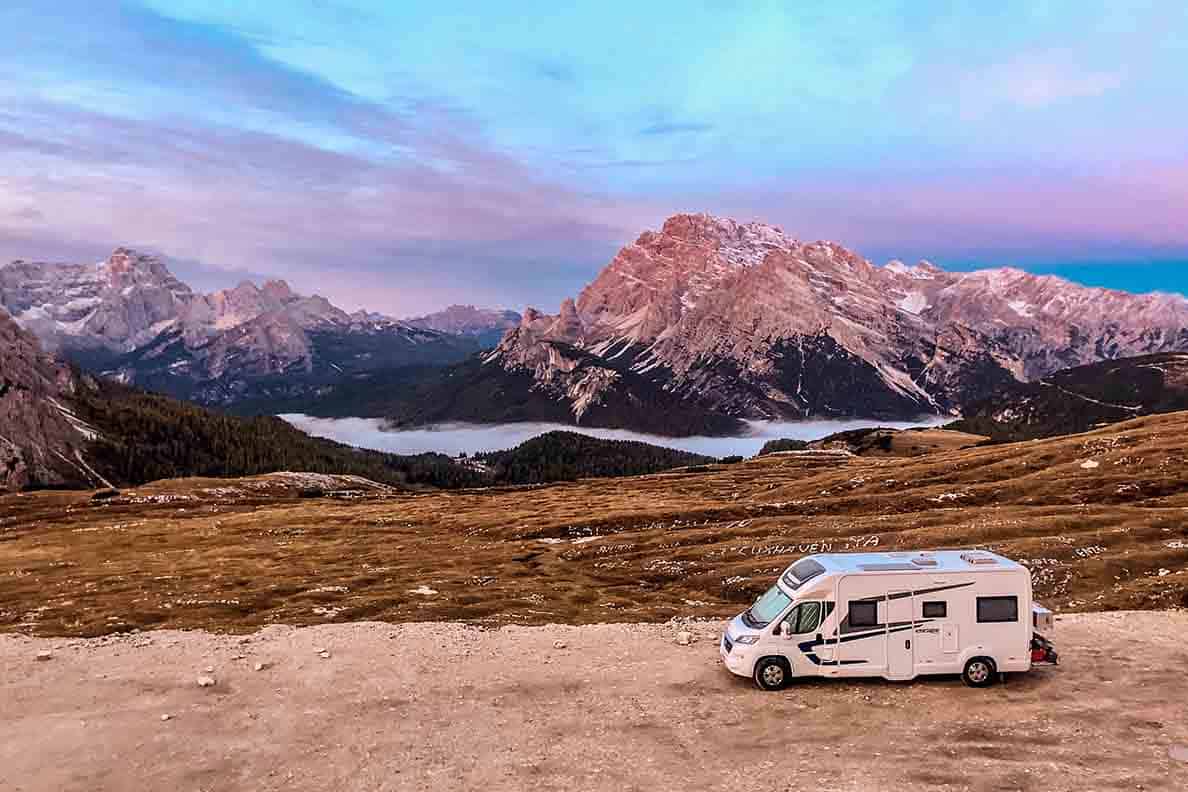
How to Get Started with Vanlife: Getting a Van
If you’re going to spend a lot of time in a van, you can either buy a vehicle or rent one. Renting a camper can be expensive, but if you’ve never spent any time in one before, it can be a great idea to give you a taste of vanlife before you fully commit – even a weekend is enough to know if the lifestyle is right for you. Alternatively, find someone who already has a van and ask if you can borrow it for a night or two.
Once you’ve tried it out and realized how awesome vanlife is, you need to get a vehicle of your own. Choosing which motorhome or campervan to buy isn’t easy- there are hundreds of styles and options on the market- from big RVs and motorhomes to micro-vans which just barely fit a bed in the back.
Make sure you pay close attention to the layout and HOW you plan to use the space. Think about the sorts of things you want to do: cooking, cleaning, sleeping, working, or even exercising. If it rains solidly for 3 days, where will you sit and eat? If you’re traveling as a couple or family, can someone be up working or reading if the other wants to stay in bed? If you have kids or pets, where will they sleep and travel safely? Make sure you get the correct number of seat belts and beds!
Thinking about how you will use the space will naturally help you discard the vehicles and layouts which aren’t right for you. Of course, you can always buy a panel van and kit it out yourself- that way you can make it exactly what you want. But that has its own challenges, such as insurance and safety, so you need to do your research carefully before you decide what path is right for you. Don’t rush this part – it’s the biggest decision of them all.

Kitting Out Your Van
Once the vehicle is chosen, the next step is to kit it out with exactly what you will want in your van. A lot of your decision-making will be down to how big your vehicle is and how much storage space you have.
Traveling light goes hand in hand with vanlife. You do NOT need as much stuff as you think you do. To start, try just putting in what you need for a night – clothes, bedding, toiletries, cooking gear, eating utensils, and cleaning supplies. Don’t forget things like shoes, towels or sleepwear – or the all-important toothbrush.

From there, you can start adding in extra equipment you might need for hobbies, such as hiking or watersports gear. Then add in any extras for longer trips, such as additional clothes, outdoor seating, a BBQ or fire, an awning if you want one, or anything you need if you travel with a dog or pet. If you’re going to be working remotely, make sure to invest in a wireless travel router so that you’re always connected on the road.
Downsizing and learning to live with less isn’t always easy – there are things which you are emotionally attached to, as well as things you use all the time in a house which you may not use often in a van, such as a microwave or cake mixer.
Slowly, over time, you’ll realize what the essential gear is, and what you can do without in order to make space for something else. There are plenty of checklists and things which can tell you what to take – but don’t forget that everyone is different and has different hobbies and priorities, so be sure to think about what’s important to you.
TOP VANLIFE TIP:
Make good use of all the space. There are loads of places where you can hide extra shoes, books, and clothes without your partner knowing they are there. (Seriously, two years and my husband hasn’t found them all yet.)
My favorite place is inside a cushion- take out the padded infill and fill it with scarves, winter clothing or even additional blankets. Anything soft works just as well, and you can remove it when you need it.
How to Get Started with Vanlife: Chores on the Road
Sadly, being in a van doesn’t remove the need to do chores, like the laundry or cleaning. Even more sadly, some chores can take twice as long as you might be used to, especially when you need to find a laundromat, or if you don’t have a vacuum with you and have to clean with a brush.
On the positive side, your van is (probably!) much smaller than a house, so cleaning is quicker and you’ll need a lot fewer products and tools than you might use in a house. I can sweep and clean inside our van in under an hour (the outside takes longer but doesn’t need to be done as frequently).
As well as cleaning, you also need to do regular vehicle maintenance – both on the engine and in the living area. Because it is a smaller space, you use things more frequently, which means they can wear and break more easily. Staying on top of maintenance, looking after your motorhome leisure battery, and carrying out basic repairs can make your whole experience more enjoyable and help you avoid unnecessary and expensive breakdowns.
Plan Your Travel Slowly
Slow travel can be a challenge if you’re new to it. When we started, the idea of taking a week to explore a small area was totally foreign to me – I was used to getting to a place, having a schedule, rushing around like a headless chicken to see everything I wanted to on that schedule (which was more than humanly possible), and then getting upset when it didn’t all go to plan. God forbid my husband wanted an extra cup of coffee or to sleep in! (It’s a wonder I’m still married, quite frankly!)
But traveling by road forces us to slow down. Often the prettiest roads are the backroads or the coastal route. Sure, it’s possible to use the toll roads or highways to get places fast, and if you’re limited on time there’s nothing wrong with that, but some of our best interactions and experiences have been in the smaller, out-of-the-way places you find off the beaten track.
Don’t forget, when you plan a route, to take account of any low bridges, narrow roads, or other obstacles which you may not be able to cross in a van. Getting a proper sat-nav or route planning tool can really help with this.
Also, be sure to allow time to explore and take advantage of things you find as you travel, such as local markets, festivals, or invitations from people you meet on the road. It’s these interactions that have made vanlife so exciting for us – and allowed us to make some great friends who we would never otherwise have met.

Overnight Parking
There are normally three types of places you can stay overnight with a van: campsites, approved parking spots, or off-grid camping.
Campsites are easy to find and use in most places and they generally have essential facilities such as hygienic waste disposal and the ability to get fresh water, but they can be expensive to stay at every night.
Finding approved parking places is easy enough – there are plenty of apps and websites where the information is available, or you can buy a book that has them listed. Just beware of anything in a printed guide, as the information can go out of date quickly – this is why we prefer to use an online guide so we can see if anything has changed.
If you want to stay far far away from people, it is often possible to find a quiet, remote spot where you can stay for free overnight, such as in a forest or up a mountain. Be aware of National Park boundaries – most National Parks have strict bans on vans staying overnight in them and the wardens will fine you and move you on if they catch you.
If you do decide to boondock or wild camp, there will obviously be no facilities or electric hookup, so you’ll need to make sure your van is suitably equipped and able to survive a night or two without additional power sources. Fitting a solar panel and possibly an extra battery can help with this. You can also fit low-power lights so they don’t drain too much.
Alternatively, you can carry an additional power source such as a motorhome generator. We don’t advise using these near other people, as they can be intrusive, but as a backup or emergency option they are very useful.
How to Get Started with Vanlife: Final Thoughts
With all the above, you’ll be ready to get started with your vanlife adventure, no matter how long it might last for.
Vanlife doesn’t have to be daunting, but it does require some thought and planning before diving in. Otherwise, you’ll make some expensive mistakes which can take a long time and a lot of money to fix.
Make sure to do your research and take into account the views and opinions of everyone who you will be traveling with. On the flip side, don’t listen too much to friends or family who don’t understand your dream – this is your adventure, not theirs. Feel free to find me on social media if you’d like some encouragement or advice- I LOVE hearing from people considering life outside of the norm.
About the Author: In 2018, Kathryn Bird quit her job as an air traffic controller to explore Europe in a motorhome with her (bewildered) husband and over-excited puppy. Since then, they’ve visited 19+ countries and driven over 60,000 miles, sharing their experiences on the award-winning motorhome travel blog Wandering Bird.
She is passionate about inspiring others to experience the freedom of life on the road, whether for a long weekend away or selling up to live full-time vanlife. You can read more about Kathryn’s adventures, tips and ‘How to’ guides on their website, or find them on YouTube or Instagram.
Pin this to your vanlife board on Pinterest to save it for later!

